When the Market Shifts, Your Strategy Should Too

TL;DR: Real estate agent Michael Hernandez adapted through three major market shifts by focusing on foreclosures during 2008, going solo for accountability, and pivoting to new construction when interest rates climbed. His career shows that adaptation beats waiting for better conditions.
Core Insights
Newly built homes represented 33.4% of single-family homes for sale in Q1 2024, nearly triple the traditional 10-12% market share
Rising interest rates reduced buyer purchasing power by 12-15%, making builder incentives critical for closing deals
Performance-based real estate models require immediate problem-solving because agents guarantee results
87% of real estate agents don't make it to their fifth year, primarily because of weak accountability systems
Homes with owned solar panels spend 13.3% less time on market than homes without solar, while leased systems create transaction complications
I've been watching real estate agents struggle with the same problem for years.
The market changes. Interest rates spike. Inventory dries up. The playbook that worked last year stops working.
Most agents wait. They hope things go back to normal. They keep doing what they've always done, expecting different results.
Michael Hernandez didn't wait.
When interest rates climbed and traditional home sales stalled, he made a strategic pivot. He shifted his entire focus to new construction.
The data proves he was onto something. During the first quarter of 2024, newly built homes made up 33.4% of single-family homes for sale. That's nearly double the pre-pandemic levels. New-home sales traditionally account for about 10% to 12% of the market, but recently they've comprised more than 30%.
This wasn't luck. This was recognizing a fundamental market transformation while everyone else was complaining about rates.
How Did Hernandez Start in Real Estate?
Hernandez's career started in the wreckage of the 2008 financial crisis.
Fresh out of college, he jumped into real estate during one of the worst housing markets in modern history. While other new agents struggled to find any business, he found opportunity in foreclosures.
The work was brutal. Emotionally draining. He dealt with families losing their homes, bank bureaucracy, and properties in terrible condition.
But it taught him something critical: how to navigate complexity when everyone else is paralyzed.
He learned the mechanics of distressed sales, how to work with lenders, and how to manage transactions that most agents avoided. These weren't skills you pick up in a licensing course.
More importantly, he learned that markets don't care about your comfort zone. You adapt or you disappear.
Bottom Line: Starting in foreclosures during the 2008 crisis taught Hernandez to handle complex transactions and adapt when other agents were paralyzed by market conditions.
Why Did Hernandez Go Solo?
After years working under a team structure, Hernandez made another pivot. He went solo.
The decision came down to control and accountability. Working on a team meant splits, shared leads, and decisions made by committee. Going independent meant he owned his results completely.
No safety net. No shared blame. Direct accountability for every client relationship and every transaction.
This is where most agents fail. Roughly 33% of new agents don't renew their licenses after their first year, and 87% won't make it to their fifth year. The primary reason? Lack of accountability systems.
Hernandez didn't survive as a solo agent. He thrived because he understood something fundamental: accountability separates high achievers from everyone else.
The best agents don't avoid accountability. They seek it out.
Bottom Line: Going solo gave Hernandez complete control and direct accountability, which separates successful agents from the 87% who fail before their fifth year.
Why Did Hernandez Pivot to New Construction?
When interest rates started climbing, Hernandez saw the writing on the wall.
Rising rates shrink buying power significantly. A buyer who qualified for a $400,000 mortgage might now only qualify for $350,000 to $375,000. That's a 12-15% reduction in buying power.
Existing homeowners weren't selling. Why would they? They were locked into low rates from years prior.
But builders? They had to move inventory. They had tools to make it happen.
Hernandez shifted his focus to new construction because builders were offering incentives that made deals possible: mortgage-rate buydowns and cash toward closing costs.
Sales of newly built single-family homes rose 6.3% year over year in September 2024, partly because builders enticed buyers with these incentives.
While other agents sat around waiting for rates to drop, Hernandez was closing deals. He recognized that the market had fundamentally shifted, and he positioned himself where the actual transactions were happening.
Townhouse construction alone totaled 174,000 homes in 2024. That's 10% higher than 2023. Builders were responding to affordability concerns, and agents who recognized this product-mix evolution capitalized on it.
Bottom Line: Hernandez pivoted to new construction because builders offered rate buydowns and closing cost incentives while existing inventory dried up, allowing him to close deals when other agents were waiting.
What Are the Risks with Solar Properties?
One area where Hernandez emphasizes extreme caution: solar properties.
Homes with solar panels sell for an average of 4.1% more than comparable homes without solar across the US.
The catch: leased solar systems create transaction nightmares.
Buyers want to know if they'll need to assume the lease, how much is left, whether the system will be removed, and what happens if something breaks. If buyers don't understand the setup, the sale slows down or dies entirely.
Owned systems perform better than leased ones. Homes with owned solar panels spend 13.3% less time on the market than homes without solar power.
Hernandez's approach? Full transparency upfront. No surprises. No hidden complications that surface during due diligence.
This is where the performance-based model matters. When you guarantee results, you address problems immediately.
Bottom Line: Owned solar systems add value and speed sales, while leased systems create complications that require full transparency to avoid killing transactions.
How Does a Performance-Based Real Estate Model Work?
Hernandez eventually joined Your Home Sold Guaranteed Realty, a brokerage built on a performance-based business model.
The concept is simple: if they don't sell your home, they buy it.
This isn't marketing language. It's a binding commitment that forces a completely different operating standard.
You make that guarantee when you're right about pricing, marketing, and execution. You address problems immediately instead of hiding them or hoping things work out.
Most brokerages don't operate this way because the risk is too high. For agents who've built their entire career on adaptability and accountability, it's the only model that makes sense.
Bottom Line: Performance-based models require agents to guarantee results by buying unsold homes, which forces immediate problem-solving and accurate pricing instead of hope-based strategies.
What Does This Mean for Real Estate Agents?
The nation continues to struggle with a housing deficit of 1.5 million homes. That's the result of a decade of under-building that began after the Great Recession.
The combination of high mortgage rates, steep home prices, and insufficient inventory levels means 2025 remains tough for buyers and sellers.
Buyers will eventually stop holding out for lower rates. They'll accept the new normal, and market movement will follow.
The agents who survive and thrive won't be the ones waiting for perfect conditions.
They'll be the ones who recognize market shifts early, pivot their strategies accordingly, and maintain accountability standards that most agents don't match.
Hernandez's career demonstrates a simple truth: markets reward adaptation, not hope.
When foreclosures dominated, he learned foreclosures. When independence made sense, he went solo. When rates killed traditional sales, he shifted to new construction. When complexity threatened transactions, he built systems for transparency.
The market doesn't care about your preferred way of doing business. It cares whether you deliver results when conditions change.
Bottom Line: Real estate agents who recognize market shifts early and adapt their strategies will outperform agents who wait for market conditions to improve.
Frequently Asked Questions
Why are new construction homes taking up more market share?
New construction homes represented 33.4% of single-family homes for sale in Q1 2024 because existing homeowners are locked into low mortgage rates and refuse to sell. Builders must move inventory and offer incentives like rate buydowns and closing cost assistance to close deals.
How do rising interest rates affect buyer purchasing power?
Rising interest rates reduce buyer purchasing power by 12-15%. A buyer who qualified for a $400,000 mortgage before rate increases might now only qualify for $350,000 to $375,000, which forces buyers to look at lower-priced homes or wait for better conditions.
What's the difference between owned and leased solar panels on homes?
Owned solar panels add value and speed sales. Homes with owned systems spend 13.3% less time on market and sell for 4.1% more than comparable homes. Leased solar systems create complications because buyers must understand lease terms, assumption requirements, and maintenance responsibilities before closing.
Why do 87% of real estate agents fail before their fifth year?
The primary reason is lack of accountability systems. Agents who work on teams or rely on shared leads don't develop direct accountability for results. Solo agents and performance-based agents who guarantee outcomes build stronger accountability systems because their income depends entirely on their own execution.
What is a performance-based real estate model?
A performance-based real estate model guarantees specific results. For example, Your Home Sold Guaranteed Realty promises to buy your home if they fail to sell it. This forces agents to price accurately, market effectively, and address problems immediately instead of hoping for the best.
Should real estate agents wait for interest rates to drop?
Waiting for better conditions is a losing strategy. Buyers will adapt to the new normal, and market movement will resume. Agents who pivot their strategies to where transactions are happening will close deals while agents who wait will lose market share.
How does the housing deficit affect the 2025 market?
The 1.5 million home deficit means inventory will remain tight. Combined with high mortgage rates and steep home prices, 2025 will remain challenging. Agents who focus on new construction and builder incentives will find more opportunities than agents focused on existing home sales.
What lessons from 2008 foreclosures apply to today's market?
The 2008 crisis taught agents to navigate complexity when others are paralyzed. The same principle applies today. When rates rise and inventory shrinks, agents who learn new transaction types and adapt their strategies will outperform agents who stick to familiar approaches.
Key Takeaways
Markets reward adaptation, not hope. Agents who pivot strategies when conditions change will outperform agents who wait for perfect conditions.
New construction represented 33.4% of single-family home sales in Q1 2024 because builders offer rate buydowns and closing cost incentives while existing homeowners stay locked into low rates.
Rising interest rates reduce buyer purchasing power by 12-15%, forcing agents to shift focus from traditional sales to builder incentives and new construction opportunities.
Accountability separates successful agents from the 87% who fail before their fifth year. Solo agents and performance-based models force direct accountability for results.
Owned solar panels add 4.1% to home values and reduce time on market by 13.3%, while leased systems create transaction complications requiring full transparency.
Performance-based models guarantee results by committing to buy unsold homes, which forces accurate pricing and immediate problem-solving instead of hope-based strategies.
The 1.5 million home deficit and high interest rates mean 2025 will remain challenging, but buyers will adapt to the new normal and market movement will resume for agents who position themselves correctly.
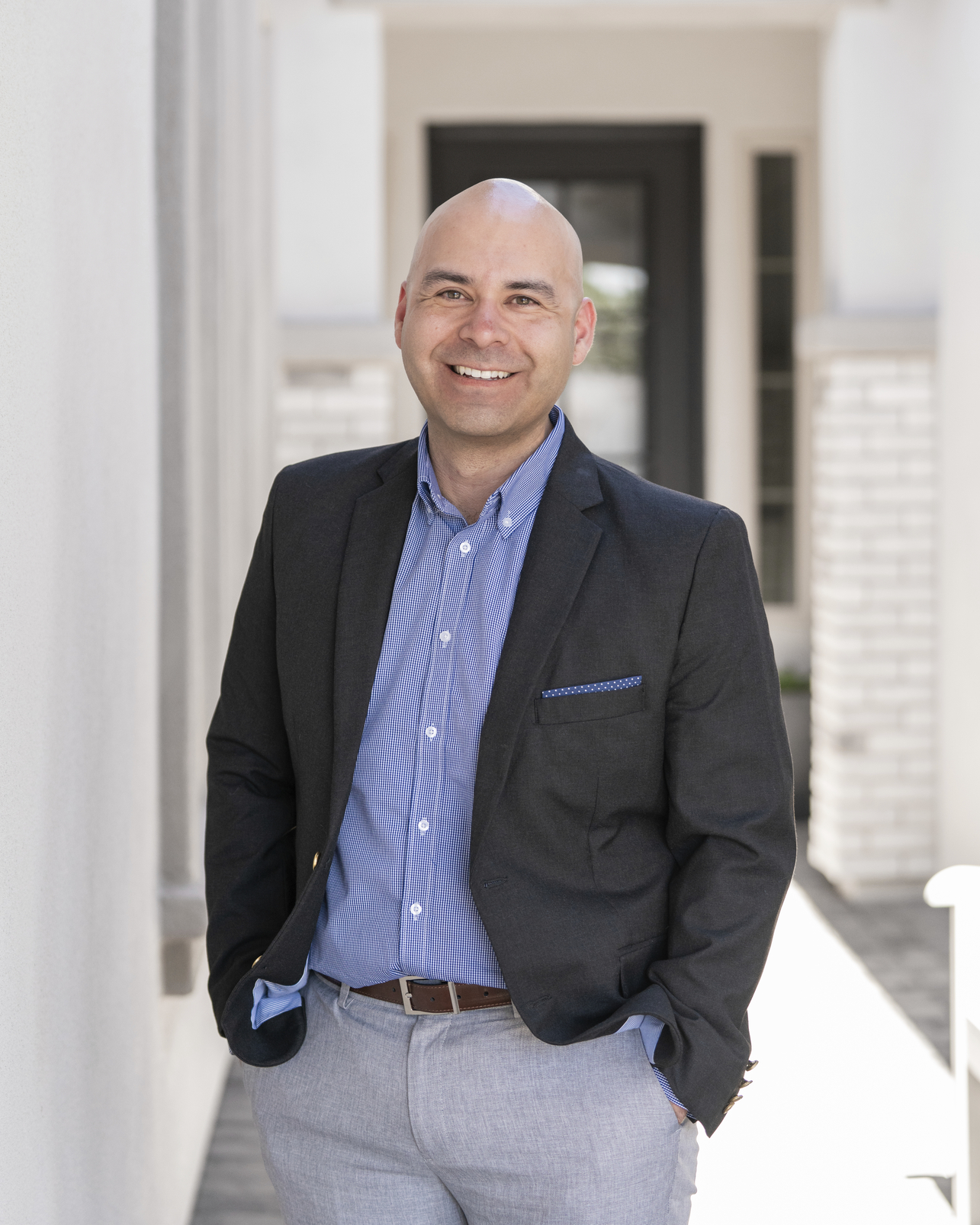
Strategic Growth Advisor
Hi, I’m Mat Torres. I help people in business and growing their network—whether it’s protecting what matters or making meaningful connections. As a military veteran, Arizona native, and lifelong problem solver, I take a personal approach to guiding people through life’s big decisions. Outside of work, you’ll probably find me geeking out over sci-fi shows, playing the trumpet, acting, or tinkering with a software project. I also love watching Shark Tank because it inspires me to think outside the box.